Research
My research connects superconducting quantum circuits with particle physics. Superconducting qubits are sensitive to single quasiparticles and photons, making them both vulnerable to environmental backgrounds and uniquely suited as sensors for fundamental physics. Below I outline some central topics of my work. More details on specific projects can be found under "Projects" in the menu.
Superconducting Qubits are Particle Detectors
Superconducting qubits are micrometer-scale circuits made of superconducting thin films, operated at millikelvin temperatures inside dilution refrigerators. A quantum state is captured in the electromagnetic field of a junction-capacitor loop, with transition energies of only a few microelectronvolts. This makes them among the most sensitive devices ever built — but also vulnerable to their environment.
The superconductor's electrons form Cooper pairs with a binding energy of about one millielectronvolt. Ambient radiation — infrared photons, microwave fields, or cosmic rays — can break these pairs and generate Bogoliubov quasiparticles, unbound electrons that interact with the trapped quantum state and cause computational errors. For quantum computing, this is a problem. But for particle physics, it is an opportunity: superconducting qubits can detect single quasiparticles, a capability that even the most sensitive dark matter experiments with conventional superconducting sensors have not yet achieved.
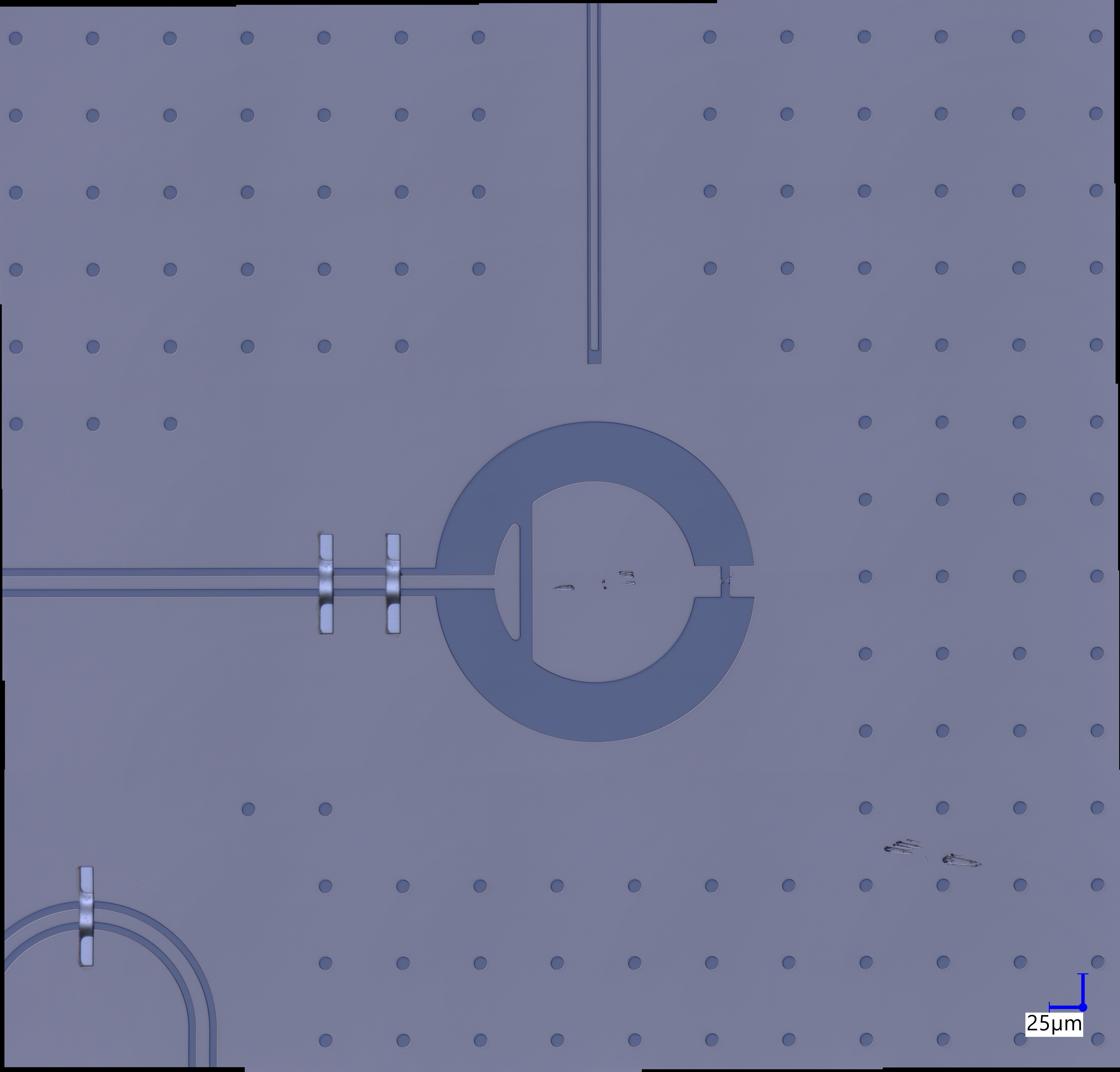
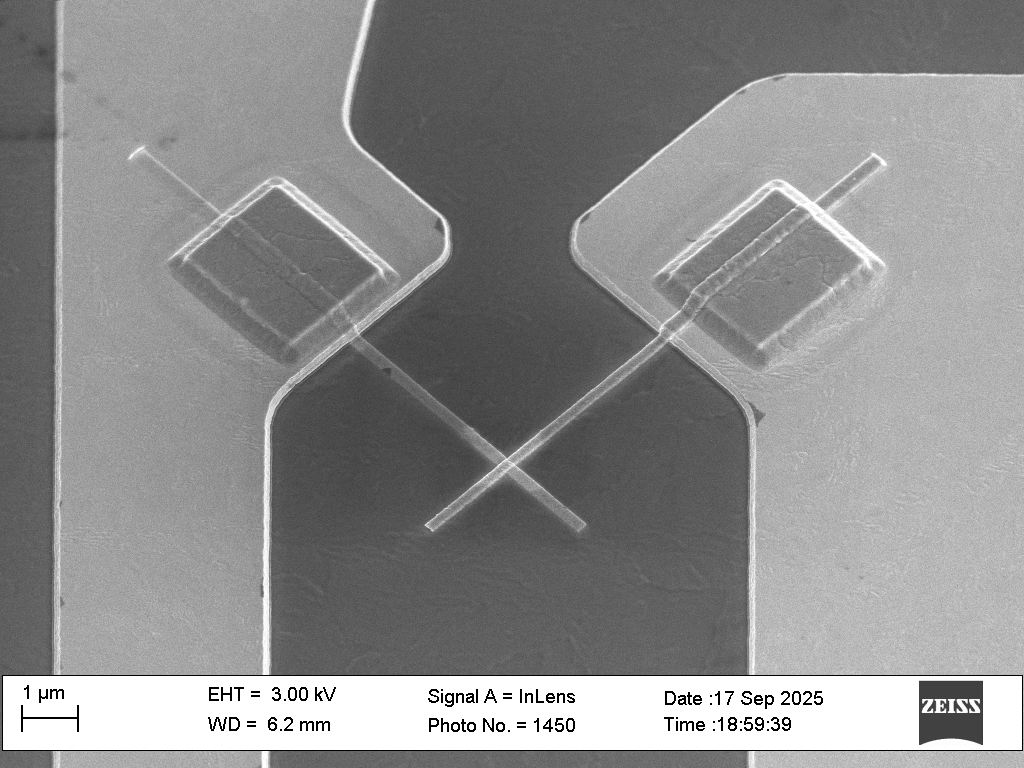
Particle physicists and quantum physicists share strikingly similar tools — superconducting sensors, high-quality microwave cavities, and millikelvin cryostats — creating a unique opportunity to simultaneously advance quantum computing and the search for new physics.
Quasiparticles in Superconducting Quantum Processors
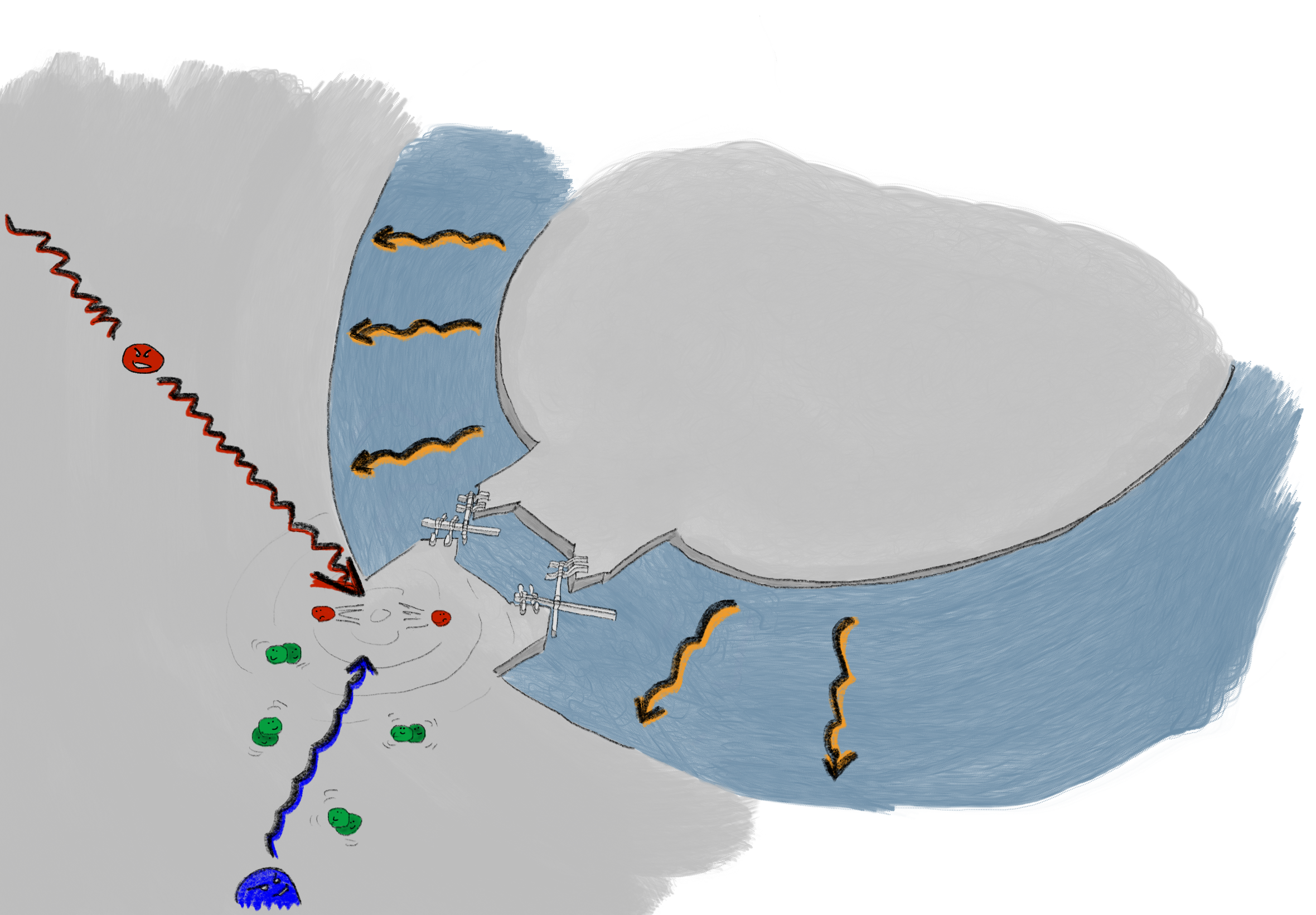
Quasiparticle poisoning is one of the key challenges on the path to error-corrected quantum computing. When a quasiparticle tunnels across the Josephson junction of a qubit, it can absorb energy from the electrical field, causing relaxation (T1 errors), or shift the qubit's transition frequency, causing dephasing (T2 errors). High-energy events such as cosmic ray impacts can generate bursts of quasiparticles that simultaneously affect multiple qubits, leading to correlated errors across a quantum processor.
Together with the team of the ETHZ-PSI Quantum Computing Hub at ETH Zurich, we study the origin, dynamics, and mitigation strategies of quasiparticle backgrounds. We use charge-sensitive superconducting qubits as quasiparticle sensors to investigate infrared and particle backgrounds in quantum computing setups. Understanding the microphysics of these processes is essential for building the next generation of quantum processors with longer coherence times and lower error rates.
Direct Detection of Dark Matter
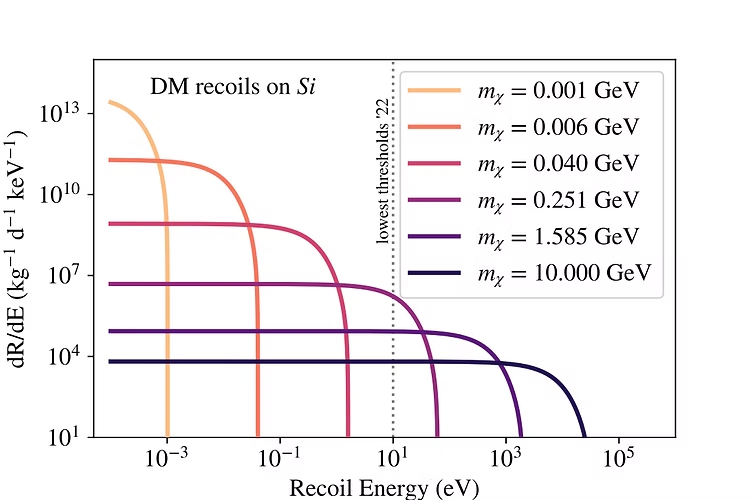
Dark matter makes up approximately 85% of all matter in the universe, yet no dark matter particle has been directly detected to date. Its presence is inferred through gravitational effects, such as the rotation curves of galaxies, making its nature one of the biggest open questions in modern physics.
Direct detection experiments, such as CRESST and COSINUS, use cryogenic calorimeters to detect the tiny amounts of energy released when a dark matter particle collides with an atom in the detector. These detectors are cooled to about 10 millikelvin and employ Transition Edge Sensors (TES) — thin superconducting films operated at their superconducting-to-normal transition — to achieve high sensitivity to low-energy particle interactions.
During my PhD at the Institute for High Energy Physics of the Austrian Academy of Sciences, I worked on the data analysis, software development, and detector physics of these experiments, including machine learning methods for automated data cleaning and detector optimization. This experience in superconducting sensor physics now informs my current work on superconducting qubits, where similar challenges in microphysics, backgrounds, and fabrication arise.